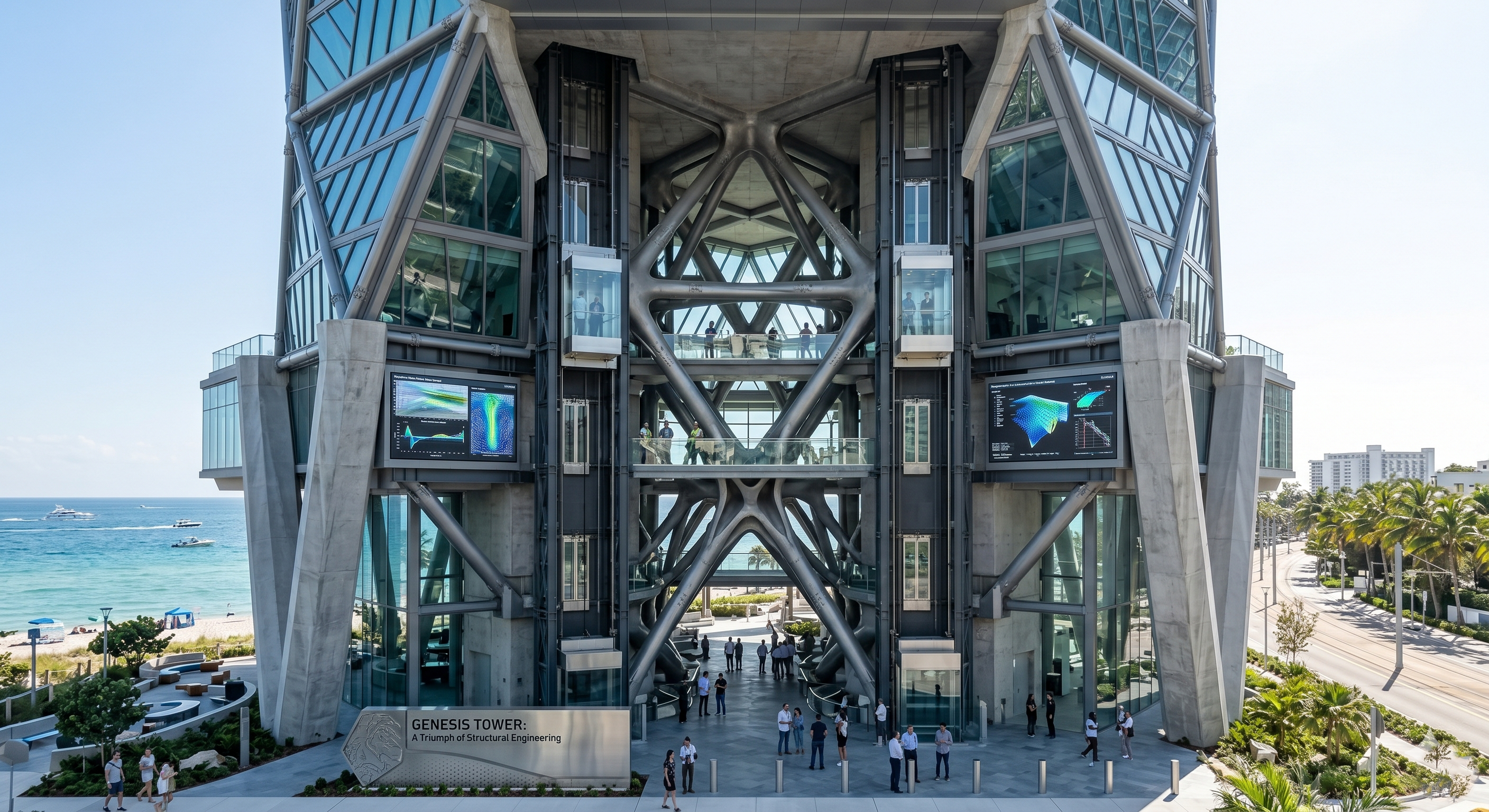
AI-powered analysis and automation are changing how engineers design structures, optimize materials, and improve construction efficiency across the industry.
The Fusion of AI & Structural Analysis
Artificial intelligence systems are increasingly integrated into engineering workflows through machine learning algorithms, computer vision, predictive analytics, and generative design tools. These systems analyze vast datasets from sensors, simulations, historical projects, and building codes to support tasks ranging from structural optimization and anomaly detection to predictive maintenance and automated compliance checks. In structural engineering, AI complements finite element analysis (FEA) and traditional modeling software, helping engineers process complex variables more efficiently while aiming to enhance accuracy and innovation.
AI Systems: Opportunities & Constraints
✔ Advantages (Pros)
- Potential for Boosting Efficiency: Properly employed, AI can automate preliminary design iterations and error scanning, allowing the structural engineer to focus on problem solving.
- Generative Optimization: Allows rapid exploration of hundreds of spatial and physical framing geometries based on cost, load path, and material boundaries.
- Predictive Care: Integrates sensor diagnostics to perform real-time structural health monitoring, warning operators of crack movements before failure.
⚠️ Limitations (Cons)
- Training Bias: Models inherit underlying dataset blindspots, predicting poorly in unusual geographic or structural layout contexts.
- Diminishing Judgment: Risk of overreliance, where probabilistic mathematical predictions dull human critical checks of site conditions or unexpected loadings.
- Transparency Limits: Neural networks act as "black box" engines. Tracking logic is difficult, raising steep validation, insurance, and liability questions.
AI Applications in Contemporary Building Design
AI is proving to be a highly effective supportive partner when deployed across targeted stages of construction and building lifecycle workflows:
- Generative Configuration: Evaluates thousands of potential framing structures against raw constraints like environmental carbon footprints, cost, thermal properties, and path loads.
- Risk Assessment & Forecasting: Utilizes history logs and climatic forecasting to predict concrete decay, steel fatigue, and seismic deformation patterns under emergency loads.
- Structural Health Monitoring (SHM): Performs instant sensor analysis on bridges and high-rises post-disaster, locating micro-deflections or interior stress cracks that remain invisible to visual checks.
- Task Automation: Accelerates clash detection between HVAC and steel framing, automates quantity takeoff checklists, and generates initial code compliance outlines.
- Resource Logistics: Coordinates on-site assembly timelines, optimizes concrete truck routing, and minimizes overall staging construction waste.
Geographic Factors & Regional Variances
AI model reliability relies heavily on regional training environments. Models trained on data from specific regions (e.g., seismic zones in California or Japan) may underperform elsewhere due to differences in climate, soil, building codes, or material availability, risking biased or unsafe predictions.
Additionally, technological divides represent a notable hurdle. Highly developed urban centers (e.g., Silicon Valley, metropolitan Europe, East Asia) access refined data resources, talent pools, and region-customized compliance tools. In developing areas, scarcity of digital infrastructure and structural records creates high adoption hurdles, worsening global technological divides.
Regulatory Boundaries: Different locations enforce highly divergent legal regimes. For instance, the European Union's strict risk frameworks prioritize explainable human-in-the-loop validation, while other regions encourage faster, less regulated innovation paths. This demands highly localized and adaptable AI tools.
Landmarks: Algorithm-Driven Architectures
AI has graduated from a purely research concept to driving actual structural milestones worldwide:
MX3D Bridge (Amsterdam)
A 12-meter pedestrian bridge that stands as the world's first 3D-printed stainless steel bridge. Generative algorithms, robotic Wire Arc Additive Manufacturing (WAAM), and structural analysis from Arup merged to print optimized material curves. Embedded sensor networks turn the bridge into a "living laboratory," continuously streaming load and deflection data.
The Phoenix (California)
An innovative sustainable housing initiative where generative design algorithms rapidly optimized spatial layouts, materials, and concrete components. By simulating wind, daylighting, acoustics, and carbon footprints simultaneously, the system minimized environmental impact while reducing structural construction costs.
Conclusion: Treat AI as a Supportive Partner
Reasons to adopt AI in modern construction include boosted efficiency, better sustainability outcomes, faster innovation, cost reductions, and improved safety through predictive capabilities—allowing structural engineers to tackle increasingly complex demands while addressing labor shortages and environmental goals.
Appropriate warnings are critical: AI is not infallible and must not replace professional judgment or licensed oversight. Risks include data biases, overreliance leading to overlooked site-specific issues, liability questions, and ethical challenges. Firms should invest in training, validation protocols, governance frameworks, and hybrid human-AI workflows.
As emphasized by industry bodies, engineers remain ultimately responsible for safety and compliance. Responsible, transparent integration—treating AI as a supportive tool—will determine its long-term success. AI is transforming structural engineering, but its greatest value emerges when paired with human expertise.