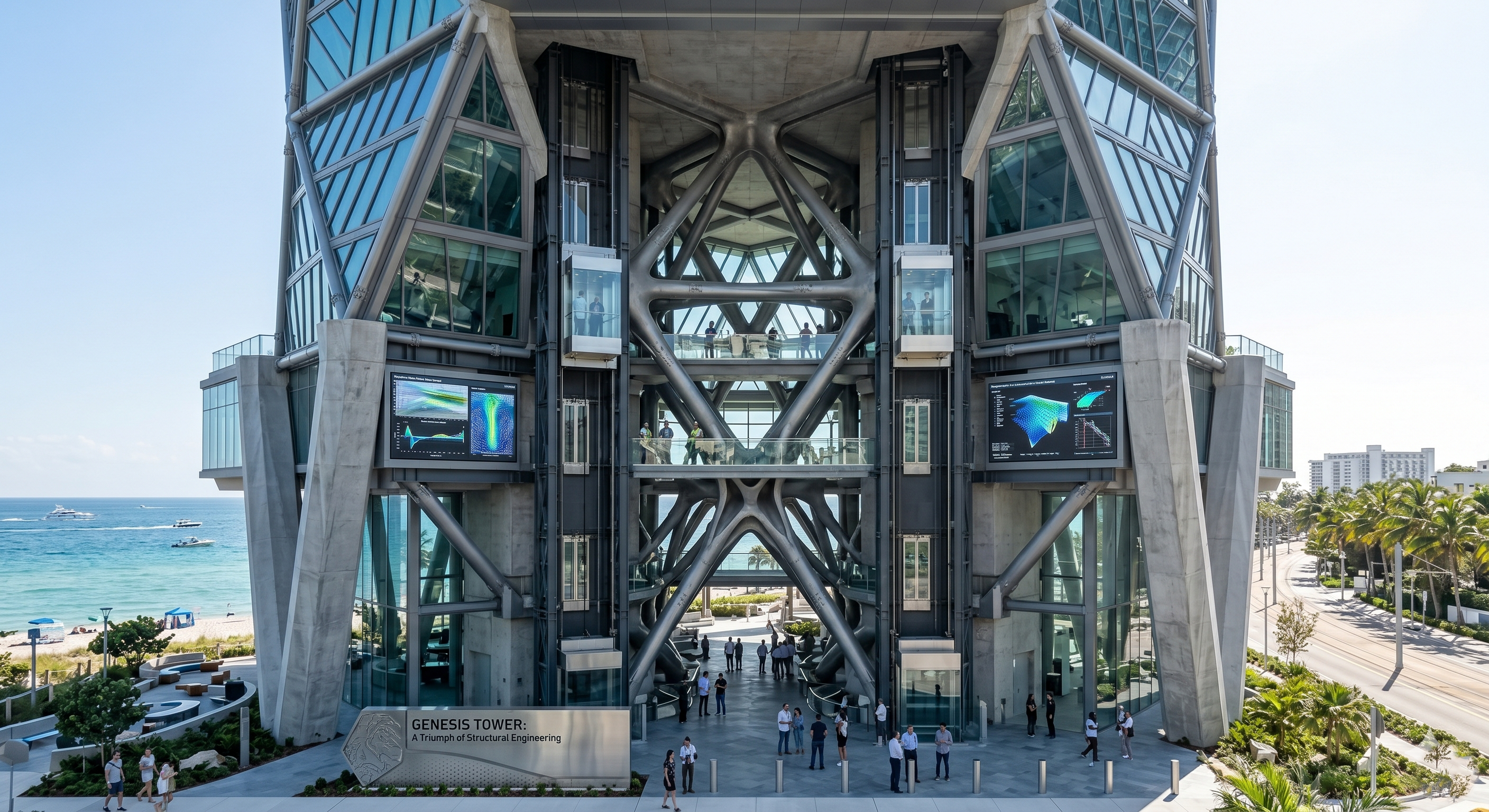
Structural engineering is rapidly evolving through the integration of AI-driven analysis, BIM technology, advanced materials, and intelligent construction systems. Discover how modern engineers are designing safer, stronger, and more efficient structures capable of meeting the demands of future urban development and infrastructure growth.
Historical Foundations
Structural engineering has deep roots in human ingenuity, tracing back over 4,700 years. From Imhotep’s design of the Step Pyramid in ancient Egypt around 2700 BC to the monumental Great Pyramid of Giza, early engineers demonstrated a remarkable understanding of load distribution and material strength.
The Romans later advanced the field with concrete, arches, and durable infrastructure like aqueducts. The Industrial Revolution brought iron and steel into widespread use, enabling the rise of skyscrapers, while the 20th century introduced reinforced concrete, prestressed systems, and computer-aided analysis.
These milestones transformed construction from empirical, trial-and-error methods into a precise, science-driven discipline focused on safety, efficiency, and continuous innovation.
Current Trends & Short-Term Outlook (Next 5 Years)
At Swartz Consulting Engineers, we see a future defined by technology integration, sustainability, and resilience. In the near term, we expect to accelerate the adoption of digital tools that enhance efficiency without requiring a complete overhaul of existing practices.
- BIM & IoT: Building Information Modeling (BIM) will become even more central, increasingly paired with IoT sensors for real-time structural health monitoring.
- AI & Generative Design: Artificial Intelligence (AI) and machine learning are poised to transform design workflows by automating routine calculations, rapidly simulating complex load scenarios, and enabling generative design that explores hundreds of structural configurations in minutes.
- Off-site Prefabrication: Prefabrication and modular construction methods will gain significant traction as a practical solution to labor shortages, project delays, and rising material costs, reducing on-site waste.
- Low-Carbon Materials: Sustainability remains a major driver, with greater emphasis on low-carbon materials such as advanced concrete mixes, mass timber, and carbon fiber reinforcements, alongside tracking and reducing embodied carbon.
- Smart Structures: Embedded sensors will become standard, shifting the industry from reactive repairs to predictive maintenance and kinetic architecture to extend building lifespans.
Global Leadership in Structural Engineering Advances
The pace and focus of structural engineering innovation vary significantly across the world, shaped by economic priorities, environmental challenges, population pressures, and technological investment.
Asia: Scale & Fast Implementation
China dominates supertall building construction and mega-infrastructure projects, leveraging rapid modular/prefabricated methods and advanced materials. Japan excels in seismic resilience, pioneering base isolation, dampers, and ultra-high-performance concrete. Singapore stands out for smart-city integration, combining BIM, IoT, and sustainable modular systems in high-density environments.
Middle East: Climate Adaptation
The UAE and Saudi Arabia lead in ambitious, iconic, and climate-adaptive structures (Vision 2030 initiatives). Driven by extreme heat challenges, they frequently adopt cutting-edge composites, passive cooling technologies, and outrigger systems suited to harsh desert conditions.
Expertise Behind Landmark Projects: The structural engineering expertise behind many of these landmark projects comes primarily from prominent American and European firms:
- •Burj Khalifa (Dubai): Designed by Skidmore, Owings & Merrill (SOM), a Chicago-based American firm that handled both architecture and structural engineering.
- •Jeddah Tower (Saudi Arabia): Structural engineering led by Thornton Tomasetti (U.S.-based), working alongside architect Adrian Smith + Gordon Gill Architecture.
- •Other Global Players: UK-based Arup and Buro Happold, Canada/UK-rooted RWDI (wind engineering), and WSP bring advanced computational modeling, wind tunnel testing, and specialized climate-adaptive solutions.
Europe: Sustainability & Precision
Switzerland, Germany, the Netherlands, and Scandinavia emphasize low-carbon materials, circular design, and regenerative systems. Top institutions such as ETH Zurich drive research in resilient and environmentally responsible structures under strict environmental regulations.
North America: Tech & AI Innovation
Led by the United States, North America drives technological innovation in AI, generative design, BIM integration, and digital twins. Prestigious institutions like MIT fuel advancements in retrofitting existing infrastructure and computational tools for complex projects.
Longer-Term Implications (Beyond 5–10 Years)
Looking further into the future, the transformation becomes more profound. Structural engineering is expected to evolve toward fully adaptive and resilient systems capable of responding dynamically to increasing climate challenges, extreme weather events, and rising sea levels.
- Bio-based Materials: Bio-based and regenerative materials, 3D-printed structural components, and advanced composites will become mainstream.
- Digital Twins: Virtual replicas of physical structures will allow engineers to simulate, analyze, and optimize building performance throughout its entire lifecycle in real time.
- AI as a Partner: AI will mature from a supportive design tool into a true collaborative partner, capable of balancing multiple complex objectives such as cost, safety, sustainability, and adaptability.
- Circular Economy: Designing buildings for easy disassembly and material reuse at the end of their lifecycle will reduce overall construction impacts.
- Quantum Computing: Quantum calculations could eventually enable unprecedented accuracy in complex structural simulations.
These advancements will also reshape the workforce, creating a growing demand for multi-disciplinary professionals who combine traditional engineering expertise with skills in data science, environmental systems, and ethical technology governance.
Conclusion: Shaping a Resilient Built Environment
The future of structural engineering in modern construction is both exciting and essential. By honoring its rich historical foundation while embracing digital innovation, sustainable practices, and resilient design, the field is poised to create safer, smarter, and more environmentally responsible built environments.
Engineers and industry leaders who proactively invest in these emerging technologies and methodologies will be best positioned to meet the challenges of a rapidly changing world. Ultimately, the next generation of structural engineering will not only support modern construction — it will help build a more sustainable and resilient future for generations to come.