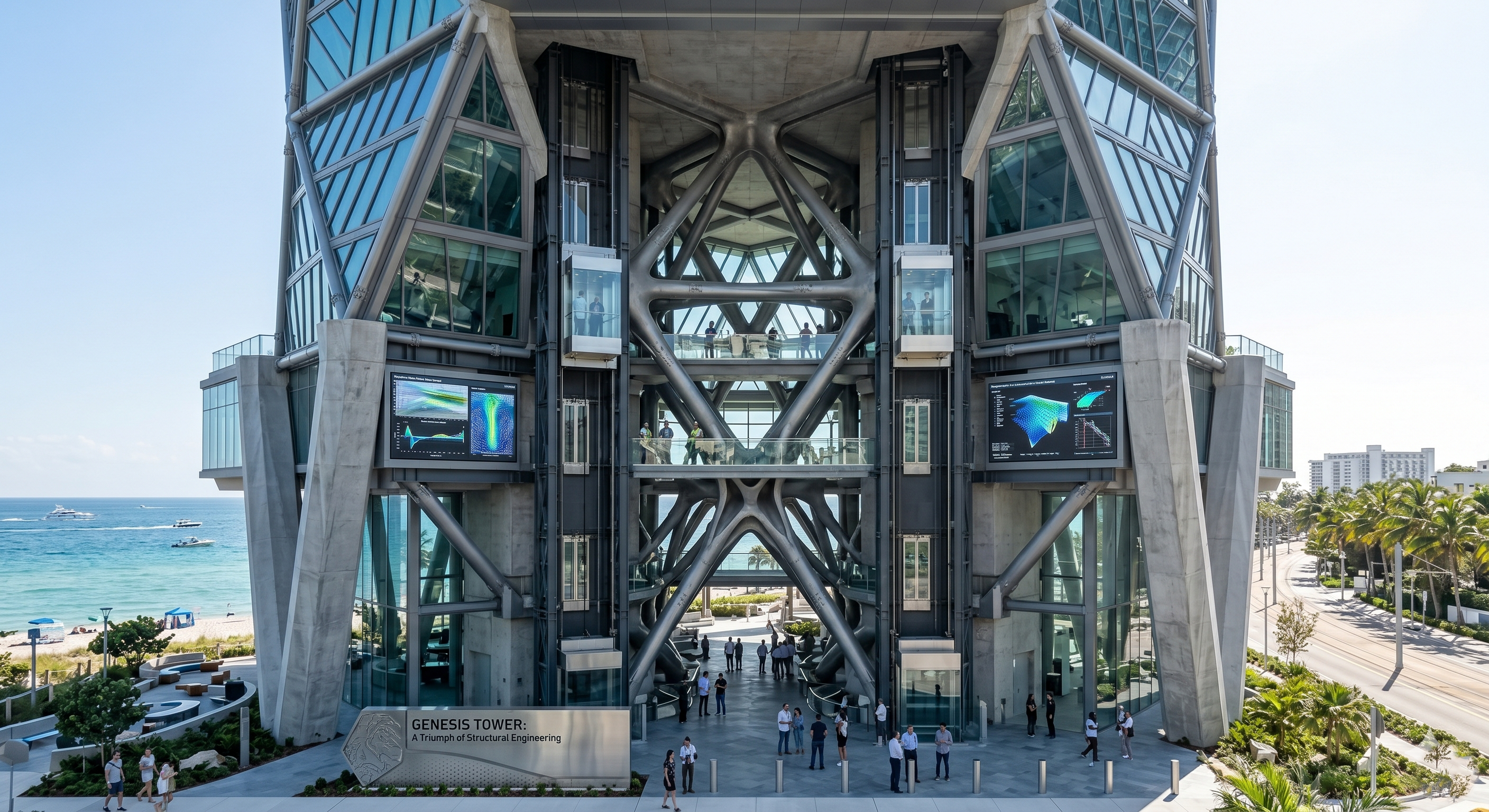
Explore the advantages and limitations of modern steel and reinforced concrete systems used across residential, commercial, and industrial construction projects.
The Backbone of Modern Construction
Steel and concrete stand as two of the most dominant materials in modern construction. Concrete, a composite primarily made from cement, aggregates (sand and gravel), and water, is the second most used material on Earth after water. It excels in compression and can be molded into various shapes. Steel, an alloy mainly of iron and carbon, offers exceptional tensile strength and is fabricated into standardized shapes like I-beams for structural use. Both materials, often combined as reinforced concrete (concrete with embedded steel bars), form the backbone of buildings, bridges, and infrastructure worldwide.
Steel: Performance & Adaptability
✔ Advantages (Pros)
- Strength-to-Weight: Significantly lighter (~60% lighter than equivalent concrete elements) yet provides superior tensile, compressive, and flexural strength, allowing for lighter foundations.
- Erection Speed: Prefabricated steel components assemble quickly on-site, decreasing structural construction timelines and lowering workforce demands by 10-20%.
- Design Flexibility: Enables impressive long spans, wide open floor plans with fewer columns, and highly customizable architectural footprints.
- Ductility & Sustainability: Exceptional performance under dynamic dynamic loads and 100% recyclable, enhancing project lifecycle ecology.
⚠️ Limitations (Cons)
- Initial Pricing: Steel frames often require higher upfront raw material investments compared to basic concrete work.
- Corrosion Risk: Vulnerable to oxidation in saline, marine, or damp environments, requiring protective coatings and cyclic maintenance.
- Thermal Bridging: High thermal conductivity can introduce heat pathways, necessitating detailed insulation barriers.
- Fire Exposure: Loses mechanical integrity at high temperatures, requiring supplementary fireproofing spray or sheathing.
Concrete: Mass, Stability & Economy
✔ Advantages (Pros)
- Compressive Performance: Highly robust under heavy gravitational compressive loads. Reinforced concrete safely coordinates tensile forces.
- Inherent Resistance: Offers natural, superior fire, wind-debris, pest, and fungal defense systems without supplementary paint treatments.
- Cost-Effectiveness: Readily accessible local material components (water, aggregates, sand) provide highly budget-friendly framing.
- Thermal Mass: High thermal inertia regulates internal building temperatures and limits heating/cooling loads.
- Moldability: Liquid casting enables fluid designs, complex geometries, and custom on-site custom structural forms.
⚠️ Limitations (Cons)
- Heavy Mass: Massive dead load demands beefier column members and expansive, expensive foundation footprints.
- Extended Schedules: Requires extensive formwork assembly, placement, and 28-day curing intervals, slowing construction compared to steel.
- Brittle Tensile Failure: Weak under tension unless heavily reinforced with rebar, rendering it vulnerable to cracking.
- Renovation Constraints: Less flexible for pure modifications: Harder to alter or expand once cast.
Applications & Structural Use Cases
Where Steel Excels
Steel is the preferred medium for structural efficiency in complex commercial structures:
- •Skyscrapers & high-rises where structural self-weight is a constraint.
- •Long-span structures requiring vast open spaces (airports, sports stadiums, major bridges).
- •Industrial parks, commercial warehouses, and modular pre-engineered buildings.
- •Fast-track developments that prioritize assembly speed or future architectural adaptations.
Where Concrete Dominates
Reinforced concrete is highly suited to robust, stable, and protective building elements:
- •Low- to mid-rise multi-family housing complexes and commercial office structures.
- •Infrastructure foundations, retaining structures, highway bridges, and dams.
- •Multi-story parking garages requiring significant mass, stiffness, and fire ratings.
- •Areas requiring high local material availability and simplified general labor skills.
Geographic Adaptability & Environmental Factors
Environmental forces like earthquake frequencies, wind velocity levels, soil load-bearing limits, and ambient humidity heavily direct engineering choices.
Seismic Resilience (Earthquakes)
Steel is naturally ductile, allowing it to flex and absorb kinetic energy in active fault zones (e.g., California or Japan). This flexibility reduces brittle structural collapse hazards. Concrete is naturally stiffer and heavier, which attracts larger seismic acceleration forces, though it performs well when engineered with robust, high-ductility rebar details.
High-Wind Resistance (Hurricanes)
In coastal hurricane zones, both mediums work effectively but utilize different methods. Steel structures leverage light framing and flexibility but can exhibit high lateral drift. Concrete excels by offering substantial dead-weight mass and high structural damping, keeping the building rigid and reducing occupant discomfort.
Foundation & Climate Considerations:
- •Corrosive & Cold Climates: Steel framing in humid or saline coastal regions requires comprehensive protection (zinc galvanization, epoxy coatings). Concrete handles humidity well but requires careful air-entrained mixtures to survive freezing freeze-thaw cycles without spalling.
- •Sub-Soil Capacity: Steel's light weight is advantageous on weak soil profiles, saving money by avoiding deep pilings. Massive concrete structures require highly robust soils or costly deep foundation solutions to control settling.
Conclusion: The Synergistic Power of Hybrid Systems
Opt for steel structural framing when construction velocity, overall light weight, long spans, and ductile seismic flexibility are primary goals. Choose concrete for its superior compressive strength, natural fire resistance, stable economics, and internal thermal performance in projects with less compressed timelines.
Hybrid engineering designs represent a highly effective frontier in modern construction. By merging concrete bases and core shear walls with steel columns and structural floor spans, engineers extract the benefits of both worlds. The concrete core provides excellent stiffness and fireproofing for service shafts, while the steel skeleton provides fast-assembling, lightweight upper framing.
These hybrid structures optimize overall foundation and framing dimensions, reduce structural timelines by up to 30%, and balance stiffness and elasticity to achieve superior seismic and high-wind performance. Advances in digital modeling and material chemistry continue to expand hybrid engineering possibilities to meet modern urban infrastructure demands.